Strength × Pilates: What It Actually Is — and Why It Matters More After 40

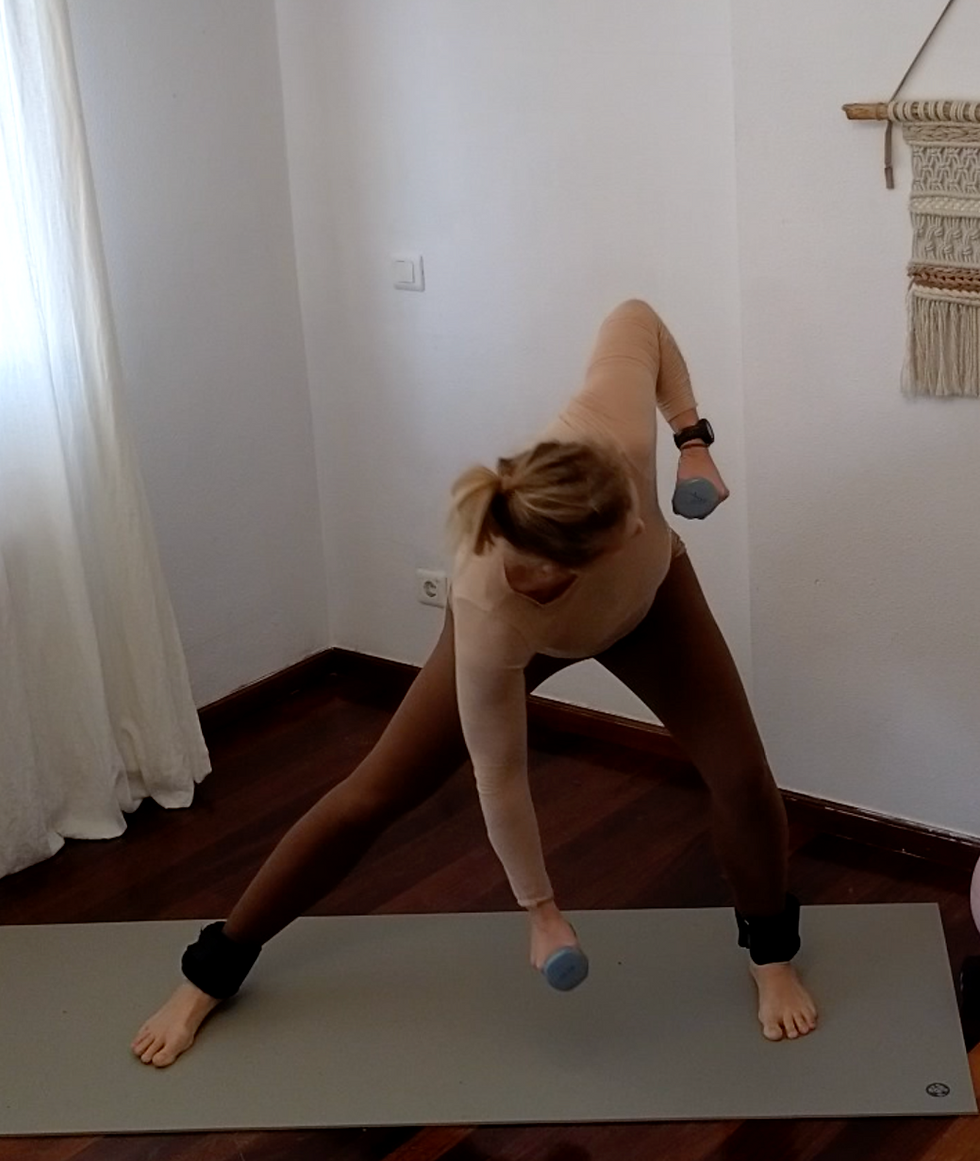
For a long time, women have been asked to choose.
Strength or control. Weights or Pilates. Power or precision.
It’s a false split. And it’s one that becomes more limiting as you get older.
Because the reality is simple:
Strength without control creates compensation. Control without load creates limitation.
Most training sits on one side of that equation.
Very little integrates both.
What “Strength × Pilates” Actually Means
This isn’t a trend. And it’s not a mash-up for the sake of variety.
It’s a shift in how the body is trained.
Strength training develops the capacity to handle load. It builds muscle, improves bone density, and creates visible change.
Pilates, at its best, develops organisation. It teaches the body how to stabilise, align, and support itself from within.
On their own, both have value. But both also have gaps.
Strength training without internal control often leads to:
Over-reliance on dominant muscles
Joint strain
Movement that looks strong, but isn’t well supported
Pilates without sufficient load often leads to:
Control that doesn’t transfer under pressure
Strength that plateaus
A body that feels “connected,” but not truly resilient
Strength × Pilates is where those gaps close.
It’s not doing both separately.
It’s applying load to a body that can organise itself.
This Is Where My Work Shifted
For years, my practice was rooted in precision-based yoga.
Not casual movement — detailed, technical, structured work.
That foundation matters. It taught me how to see the body. Where it compensates. Where it avoids. Where it collapses.
But over time, something became clear.
Control alone wasn’t enough.
You can move beautifully in low-load environments and still struggle the moment real demand is introduced.
So the focus shifted.
Not away from precision — but into something more complete.
Intelligent strength.
Strength that doesn’t override the body.Strength that works with it.
And that’s where the integration with Pilates became essential — not optional.
What Makes This Different From Traditional Training
This approach isn’t defined by the exercises themselves.
It’s defined by how they’re executed and what they demand.
"You don’t need more range if you can’t control the range you already have."
It’s not about chasing fatigue
You won’t be pushed to exhaustion for the sake of it.
Fatigue has its place. But it’s not the goal.
The goal is quality under load.
It’s not about lifting as heavy as possible
Load matters. But only when the body can support it.
Adding weight to dysfunction doesn’t create strength. It reinforces compensation.
It’s not just “core work” on a reformer
Pilates is often reduced to isolated core exercises.
That misses the point.
The role of the core is not to work in isolation —it’s to organise the entire body under movement and load.
It’s not flexibility-driven
You don't need more range if you can't control the range you already have.
This work builds strength through range, not just access to it.
What You’ll Actually Feel
This is where most people recognise the difference.
Not in theory — but in their body.
With this approach, you’ll start to notice:
More stability under load
Exercises feel more controlled, less chaotic
Less pressure in the joints
Knees, hips, shoulders feel supported rather than strained
Strength across a full range
Not just in the middle, but at the edges where most injuries happen
A clearer sense of where effort should be coming from
Instead of everything working at once, the right things start doing the work
Awareness under effort
Not just when you’re lying down or moving slowly, but when the work is actually demanding
This isn’t about feeling destroyed after a session.
It’s about feeling more capable inside your body.
Why This Matters More After 40
In your 20s and 30s, the body is more forgiving.
You can train inefficiently and still get results.
That changes.
After 40, several things start to shift:
Muscle mass becomes harder to maintain
Recovery capacity decreases
Joint sensitivity increases
Hormonal changes affect how the body responds to stress
None of this is a problem — unless your training doesn’t account for it.
Because what matters now isn’t just what you do.
It’s how well your body can support what you do.
This is where most approaches fall short.
Heavy strength training without control increases wear and tear. Low-load movement without progression stops creating change.
You end up stuck between:
Doing less to avoid discomfort
Or pushing harder and feeling the consequences
Neither is sustainable.
Strength × Pilates bridges that gap.
It allows you to:
Build and maintain muscle
Support your joints properly
Improve movement quality
Train in a way your body can recover from
The body becomes less forgiving of inefficiency.Which is why precision becomes non-negotiable.
This Isn’t About Doing More — It’s About Doing Better
There’s a tendency to think the answer is more:
More workouts
More intensity
More variety
But more isn’t what creates change.
Better does.
Better organisation. Better load management. Better understanding of your own body.
When those are in place, you don’t need excess.
You get results from what you’re already doing — done properly.
Always Refining
This approach isn’t fixed.
It’s built on ongoing observation, study, and application.
The body isn’t static. And neither is good training.
What works isn’t based on trends or popular methods.
It’s based on:
What holds up under load
What translates outside the session
What continues to work over time
That requires refinement.
Not constant change for the sake of it —but continuous improvement in how things are applied.
If You Train With Me
You won’t just be given exercises.
You’ll learn how to use your body properly under load.
That means:
Understanding where your strength is coming from
Recognising where you compensate
Building support where it’s missing
The goal isn’t just to get stronger.
It’s to become structurally capable.
Because when your body is organised and strong:
You move differently. You train differently. And things that used to feel difficult stop feeling like a struggle.
Continue the Work
If you’ve read this and something clicks, it’s not accidental.
This is the natural continuation of the work I wrote about in “Strength Training Meets Pilates: Build a Strong, Supported Body”
That piece explains where this approach came from. This one shows you how it applies.
Together, they form the foundation.
Try It for Yourself
Understanding this concept is one thing.
Feeling it in your body is where it changes.
Inside the 3-day free trial, you’ll experience:
How strength and control are trained together
What proper support actually feels like under load
The difference between effort and organisation
No noise. No excess. Just clear, structured sessions designed to show you exactly what this work is.
Final Thought
Strength and Pilates were never meant to be separate.
One builds capacity. The other builds control.
You need both.
Especially now.
Not to train harder —but to train in a way that actually works.
♡ Shaini


Comments